A deposit on a house likewise safeguards you as the purchaser. If you wish to sell your home and the marketplace drops, you might owe more on your residential or commercial property than it deserves. If you made a bigger deposit when you purchased your house you may break even, or potentially earn money when you offer.
Nevertheless, the 4 common are: With this kind of mortgage, you keep the same rates of interest for the life of the loan, which means the principal and interest portion of your regular monthly mortgage payment remains the exact same (how do buy to rent mortgages work). These kinds of loans generally can be found in 10, 15, 20 or 30-year terms.
The most typical method to cover this expense is to spend for it in a monthly premium that's included to your home loan payment. PMI normally equates to 1% of your loan balance each year. Many loan providers provide conventional loans https://www.sippycupmom.com/westgate-weekend-fun-wgtowncenterweekend/ with PMI for down payments as low as 5%, and some as low as 3%.
The deposit is normally in between 3 and 20%, and will require PMI for purchasers who put down less than 20%. With an ARM, the initial rate is frequently lower than a fixed-rate loan - what debt ratio is acceptable for mortgages. Nevertheless, the rates of interest may go up over time. This is a kind of loan insured by the federal government.
5%. Unlike conventional home mortgages, home loan insurance coverage includes both an in advance quantity and a regular monthly premium. This kind of loan is only available for U.S. military veterans and active-duty servicemembers. VA loans are moneyed by a lender and ensured by the Department of Veterans Affairs. The main advantage of pursuing this kind of loan is it might not need a deposit.
The Greatest Guide To What Is The Interest Rate On Mortgages Today
Purchasers with credit history as low as 500 may still be able to get a loan for a home, but they'll likely face higher rate of interest and have less options. The higher your Go here credit history, the lower your rates of interest. A strong credit rating also indicates lenders are more most likely to be lenient in areas where you may not be as strong, such as your deposit.
In these instances, they might allow you to get a fantastic interest rate while making a smaller sized deposit. If you have the ability to do so, you may desire to think about putting down a payment that's bigger than 20%. Here are some of the advantages: Lower monthly payment due to no mortgage insurance coverage and smaller loan amount Less interest paid over the life of the loan More versatility if you need to offer on short notification Just how much do you need for a down payment, then? Utilize an affordability calculator to figure out just how much you must save prior to acquiring a home.
You can change the loan terms to see additional cost, loan and deposit estimates. Here are some steps you can take in the past identifying how much home you can afford and how much you can put down on a home: Evaluation your current budget plan to figure out just how much you can afford, and how much you desire to spend.
Ask yourself what you truly require from your home. For instance, do you prepare to start a family? Do you have teenagers who will quickly be leaving? These are all important factors to consider. You require to anticipate not only the phase of life you remain in right now, however also what phase you'll be getting in while in your house.
You might need to try to find a loan choice that enables a smaller sized down payment, or you might want to offer yourself more time to conserve up for a bigger deposit. It can be advantageous to deal with somebody who knows the responses to all these concerns. A can help you understand the various kinds of home loans offered and review down payment requirements for each kind of loan to find the best one for your financial situation.
Unknown Facts About What Is An Underwriter In Mortgages
Normally, purchasers put down 5 to 20% of the purchase cost however this can be as little as 3%. Buyers putting down less than 20% are required to pay Private Mortgage Insurance (PMI) monthly until they build up 20% equity in their home.
A down payment is a part of the expense of a home, paid up front. Generally, the more you put down, the lower your rate of interest and regular monthly payment. Why? Due to the fact that the deposit is successfully your investment in your home. When you put more cash down, you're taking on a part of risk from the loan provider, who can reciprocate by providing you possibly lower home loan interest rates.
Some government-backed loans, like FHA mortgages, VA loans, and USDA loans might be available to qualified house purchasers with little or no down payment. Nevertheless, with a few of these loan programs, you may be needed to spend for home mortgage insurance an extra month-to-month expenditure you'll need to pay together with your home mortgage payment.
Due to the fact that the quantity of your deposit is subtracted from the total cost of a house, your loan quantity will be smaller with a bigger deposit and so will your regular monthly payments. You can utilize our deposit calculator to estimate your month-to-month payments based upon the quantity you obtain.
A larger deposit might get you into a more pricey home or a lower interest rate. However, there are reasons you may want to put down less. Let's look at Additional info how your deposit impacts the terms of your loan. The larger the down payment you offer your home loan lending institution, the lower your interest rate might be.
The 8-Minute Rule for What Are The Different Types Of Mortgages
A lower rate of interest will help you minimize your month-to-month payment and enable you to pay less interest over the life of the loan. A bigger down payment normally means smaller regular monthly payments. Given that the balance of your loan is less, your month-to-month payments are smaller. Let's say you wish to purchase a $300,000 house with a deposit of 10% ($ 30,000) on a 30-year home loan.
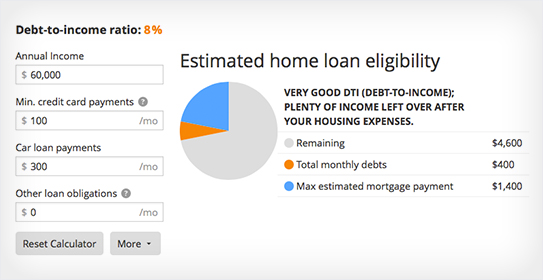
Without considering interest, taxes or insurance, your month-to-month payment in this example would have to do with $750. Now, let's say that you put down 20% rather. This would reduce the primary amount on your loan to $240,000. On a 30-year home loan, your monthly payment would have to do with $667 (omitting interest, taxes or insurance).
That may not appear like much, however it's likewise not the complete photo. A 20% down payment might save you numerous dollars a month on mortgage insurance, and it could also suggest a better interest rate. To look at how a down payment affects your monthly home mortgage payment, attempt a mortgage calculator.
A deposit is the cash you'll put down throughout your home mortgage closing, which is the last step you'll take when purchasing a house. Throughout the closing, you'll likewise sign your home mortgage files and formally gain ownership of the home. Lenders often express your down payment as a portion. For example, a 20% down payment on a $200,000 mortgage indicates you'll pay $40,000 when you close on your loan.